

If you want an inviting outdoor area that stays cool in summer, you need shade that works well and looks good. Quality sun shade sails do exactly that. They can block up to 95% of harmful UV rays and still let air move freely, which can lower the temperature underneath by 10-30 percent.
Unlike heavy, fixed roofs, these tensioned fabric canopies are light, stylish, and easy to add to patios, decks, or gardens, turning them into breezy spots you can enjoy even at midday.
Good cooling is only one part of a great outdoor setup-the real difference comes from strong materials and accurate design. By choosing a durable, well-tensioned sail, you protect your skin and your furniture from sun damage while adding a clean, modern look to your property.
Whether you want a permanent feature or a seasonal shade area, these flexible sails fit around your garden layout and can turn an ordinary yard into a standout space for relaxing and entertaining.
What Are Sun Shade Sails?
How Do Shade Sails Work to Create Comfortable Outdoor Spaces?
Sun shade sails work by stretching fabric tightly between several fixed points. Instead of a pole like a standard umbrella, a sail connects to multiple anchors such as house walls, strong trees, or steel posts. Pulling the corners tight stops the fabric from sagging or flapping, giving a firm, wind-resistant surface. If you want a professional-level setup, choose a sun shade sail from Shade4You.
The key is how breathable the fabric is. Most good sails are made from High-Density Polyethylene (HDPE) mesh with a special knit pattern. This blocks direct sunlight but lets warm air rise and pass through the material.
This “chimney effect” stops heat from building up underneath, which often happens with solid roofs like gazebos or metal carports. The space below stays fresh and feels much cooler than nearby areas that are in full sun.
Popular Shapes and Configurations for Outdoor Areas
The main shade sail shapes are triangles, rectangles, and squares, and each works best in different situations. Triangular sails are popular because they fit easily into awkward or narrow spaces and give a modern, “sailboat” style. But a single triangle shades a smaller area than a square or rectangle, so designers often use several triangles at different heights and angles to cover more space and create a striking look.
Rectangular and square sails are the main choice for larger areas such as patios, pool surrounds, and playgrounds. For tricky layouts, five- or six-sided sails can be custom-made to bend around trees or match building lines.
By combining different shapes, you can create “hypar” (hyperbolic paraboloid) designs, where opposite corners sit at different heights. This gives a wave-like twist that looks impressive and also adds strength to the structure.
Materials Used in Quality Sun Shade Sails
Good fabric is the starting point. Commercial-grade HDPE is widely used because UV stabilizers in the fibers help stop fading and cracking, even after years in the sun. It also resists mold and mildew, which matters for outdoor use.
In rainy regions, you can choose waterproof fabrics, usually PVC-coated polyester. These keep out rain completely, but they need to be installed at a much steeper angle so water runs off and doesn’t pool and damage the sail. Leading manufacturers like Shade4You specialize in these high-durability solutions, ensuring that every sail is engineered to withstand diverse weather conditions.
The edges and fittings are just as important. High-quality sails use strong webbing around the border and marine-grade 316 stainless steel D-rings at the corners. This type of steel works well in coastal areas because it resists rust and salt damage.
Some high-end sails also have stainless steel cables sewn into the edges (cabled-perimeter), which allows higher tension so the sail stays firm, neat, and quiet even in stronger winds.
Top Benefits of Using Quality Sun Shade Sails Outdoors
Protection from Harmful UV Rays and Heat
Most people buy a shade sail for comfort and health. A good sail can block up to 95% of UV rays, which helps protect children and people with sensitive skin from sunburn and longer-term skin problems. By cutting direct sun, these sails also protect your outdoor furniture, cushions, and deck surfaces from fading, cracking, and peeling.
Heat reduction is the next big plus. Surfaces in full sun can become as much as 20°F hotter than the air temperature, making decks and paving hard to walk on. A shade sail interrupts this heat build-up and keeps the ground and air underneath much cooler. Moving from inside your house to your shaded outdoor area feels comfortable, even on very hot summer days.
Improved Outdoor Comfort and Usability
A shade sail forms a kind of “outdoor room” without the cost of building an extension. It marks out a clear space-such as a dining area, lounge zone, or kids’ play spot-so your yard feels more structured and inviting. Because the fabric lets air pass through, you get shade without the heavy, closed-in feeling of a tent. This encourages you to use your garden more-hosting barbecues, reading outside, or relaxing with a drink in a cool, breezy corner.
Aesthetic Appeal and Modern Design
In terms of style, shade sails offer more flexibility than standard awnings or gazebos. Their slim lines and geometric shapes make them look light and modern. A well-fitted sail can freshen the look of an older house or add to a contemporary design.
You can choose from many colors: bright tones like red or yellow bring energy to play areas, while neutral shades such as beige or grey blend into gardens and patios and give a calm, modern feel.
Improved Privacy for Gardens and Patios
Privacy is another useful benefit. Sails are usually used as overhead covers, but you can also mount them vertically or at a steep angle to act like privacy screens. This helps in built-up areas where neighbors can easily see into your yard from upper floors.
A well-placed sail can block direct views while still letting air and light through, giving you a space that feels private without being boxed in.
Energy Savings by Reducing Heat Indoors
Placing a shade sail over sun-facing windows or glass doors can cut your cooling costs. By stopping strong sunlight before it hits the glass, the sail reduces the “greenhouse effect” that heats rooms indoors. This lightens the load on your air conditioning and lowers your power bill. It’s a simple cooling method that saves money over time and helps make your home more energy efficient.
Types of Sun Shade Sails for Outdoor Spaces
Triangular, Rectangular, and Square Shade Sails
The shape you choose usually depends on where your anchor points are. Triangular sails give the most creative layouts, as you can set them at sharp angles to create a floating look. They work well over steps, small balconies, or cramped corners. But with only three corners, each triangle casts a smaller patch of shade. For dining sets, large seating areas, or pool decks, square and rectangular sails are usually better. Their four corners give wider and more even shade through the day.
Custom and Creative Shade Sail Designs
Many yards don’t match standard sizes. Custom sails can take the form of five-, six-, or eight-sided shapes to follow building lines or curve around obstacles like chimneys and trees.
Creative designs often use several sails that overlap at different heights and in different colors. This gives more shaded area and also forms interesting patterns of light and shadow on the ground, similar to an outdoor art display.
Waterproof vs Breathable Fabric Options
Choosing between waterproof and breathable fabric means deciding whether rain protection or cooling is more important. Breathable HDPE mesh is most common for general sun shade because it lets hot air escape. If you want to sit outside during light showers, waterproof PVC or coated fabrics are a better pick. However, waterproof sails must be installed with a strong slope (at least 20%) so water runs off straight away. If water collects, the weight can stretch the fabric or damage the fixings.
Retractable and Adjustable Shade Sails
Retractable shade systems offer flexibility for changing weather and seasons. These usually run along wires with a pulley or cord system so you can fold the fabric back and forth like an accordion. You can have full shade in summer and slide the sail back in winter to let the sun warm your home.
While the setup is more involved, retractable sails are a smart choice in places where sun, cloud, and wind conditions change often.
Planning and Designing Your Outdoor Space with Shade Sails
Choosing the Right Location and Orientation
Good planning starts with knowing where and when you use your outdoor space. Do you eat outside in the early evening, or relax by the pool at midday? Place the sail so its shadow falls on that area during those times. Remember that shadows move as the sun moves.
A sail directly over a table at midday might throw shade several feet away by late afternoon. Pick a sail slightly larger than the area you want to cover, so you still get full shade as the sun shifts.
Assessing Sun Movement for Optimal Coverage
Watch how the sun moves across your yard during the day. In the northern hemisphere, the sun stays to the south, so shadows fall mainly to the north. This means your sail will often work best if it sits to the south or southwest of where you want shade.
If you like details, you can make a rough “solar study” by taking photos of your yard at different times, or by noting where the sun hits through the afternoon. This helps you find the best position for blocking strong afternoon sun.
Selecting Colors and Textures to Match Your Decor
Color affects both the feel and upkeep of your sail. Dark shades like navy, charcoal, or deep green absorb more light and can look visually cooler and more shaded, though the material itself may warm up more. Light tones like cream, white, or sand reflect more sunlight and give an open, airy look, but they show dirt and bird marks more easily.
Many people choose colors that match gutters, fences, or window frames so the sail blends with the rest of the house and garden design.
Integrating Shade Sails with Existing Structures
You don’t always need new posts to install a sail. Many setups connect to structures you already have, such as pergolas, solid fence posts, or the house fascia. When fixing to the house, use proper “fascia supports” that reach back to the rafters or roof frame, because the sideways pull from a tight sail can easily tear off a thin trim board.
Combining a sail with a pergola is becoming more common: the timber frame adds strength, while the fabric adds flexible, colorful shade.
Creative Ideas for Stylish Outdoor Spaces with Shade Sails
Overlapping and Layered Sails for Visual Interest
Using several sails together can create a striking feature. Two or three smaller sails set at different heights and in different shades add depth and movement to the space. Placing a light sail above a darker one gives a rich contrast.
Overlapping sails also leave small openings where thin beams of light pass through, so the area feels lively and not overly shaded or gloomy.
Shade Sails for Patios, Decks, and Pool Areas
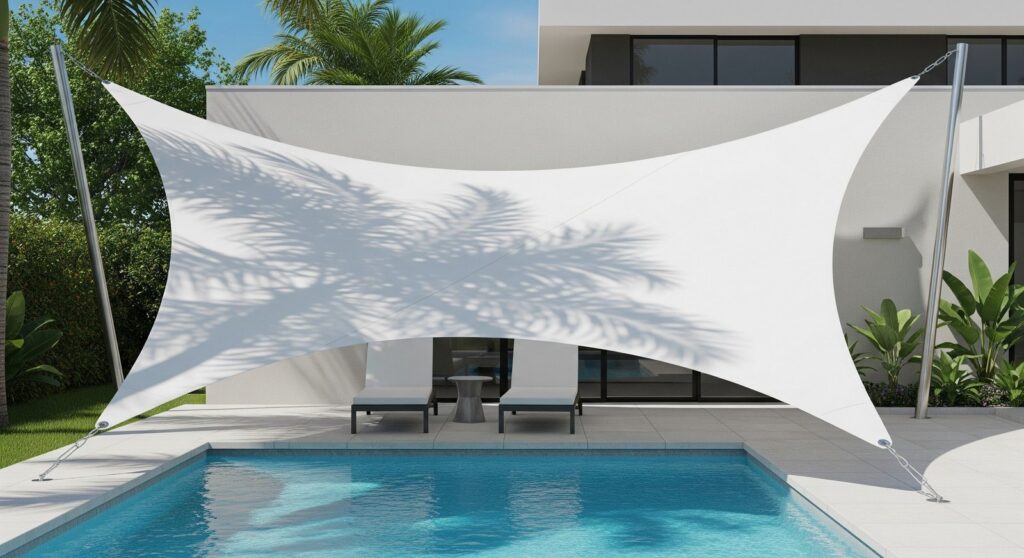
Shade sails work especially well around pools. Hanging a sail over part of the pool or hot tub lets people enjoy the water longer without worrying as much about sunburn. On decks, sails can attach to poles fixed to the railing, so you don’t lose floor space to umbrella stands.
Near water, a “hypar” twist-where two corners are high and two are low-gives a flowing, wave-like shape that complements the pool or pond.
Privacy Screens and Side Panels
Think vertically, not just overhead. A sail mounted on the side of a porch or patio can act as a privacy screen and help block wind. It can also stop low evening sun that easily gets under horizontal covers. Side panels made from the same material as the roof sail can create a cozy outdoor nook that feels enclosed enough for comfort but still open enough for air to pass through.
Colorful Canopies for Playgrounds and Gardens
For play areas, bright “rainbow” setups work very well. Using bold colors like red, blue, yellow, and green makes the space fun and child-friendly, while the fabric gives much-needed UV protection. In gardens, long narrow sails can run above paths or planting beds. This keeps gardeners cooler while working and protects shade-loving plants from harsh midday sun.
Sail-Pergola Combinations and Unique Layouts
A mixed approach often gives the best result. Attaching a shade sail across the top of a pergola combines the solid feel of timber with the soft look and flexibility of fabric. Another idea is a “floating” layout, where one corner of the sail connects to a tree or post set far back in the yard. This stretches the shaded area out into the garden and creates a sweeping, dramatic view that can make the space feel larger.
Choosing the Best Sun Shade Sails for Your Outdoor Space
Key Features to Compare When Shopping
When you compare sails, check the fabric weight, often shown as GSM (grams per square meter). Higher GSM (around 260 or more) usually means the fabric is thicker, stronger, and better at blocking UV rays. Look at the stitching around the edges-good sails have double rows of strong stitching along the full perimeter to handle high tension.
Also check that the corner fittings are marine-grade stainless steel. This helps prevent rust and ugly stains after rain.
Warranties and Product Certifications
A good sail should last several years, and the warranty should match that. Many trusted brands offer 5-10 year fabric warranties against UV damage, and some heavy-duty commercial models go up to 15 years.
For public or shared spaces, look for products tested and approved by health or safety bodies, such as skin cancer councils or local fire safety standards. These labels show the product has been checked for strong sun protection and basic safety.
Installation: Steps and Key Considerations
Anchor Points: Secure and Safe Attachment
The strength of any shade sail depends on how well it is fixed. For posts, use steel or thick treated timber (such as 6×6 posts). Steel posts should usually sit in the ground at about half their height above ground and be set in concrete. So a 10-foot post would need a 5-foot deep concrete footing.
When fixing to brick or concrete walls, use heavy-duty eye bolts fixed with suitable anchors or epoxy, so they can handle the high sideways forces when the wind hits the sail.
Tension, Drainage, and Water Runoff
A slack sail will move, flap, and wear out faster. Use turnbuckles or similar fittings to tighten the fabric until it is smooth and firm. Don’t install sails flat. Even mesh sails can hold small pools of water if they are too level. Aim for a slope of at least 18-20 degrees from high to low points. This helps rain and leaves slide off, reduces strain on the fabric and fixings, and keeps the sail looking neat.
Weather and Wind Safety Precautions
Shade sails can withstand normal breezes and moderate winds, but they are not storm barriers. In areas with hurricanes or very strong winds, use quick-release hardware such as snap hooks or carabiners so you can take the sail down quickly when storms are forecast. In snowy regions, you should always remove sails for winter. Snow build-up is heavy and is one of the main reasons shade sails and their fixings fail.
DIY vs Professional Installation: What to Know
Simple setups using one or two triangle or rectangle sails are often manageable as a DIY project if you are comfortable with basic tools and digging post holes. For bigger jobs-such as commercial spaces or multi-sail structures-professional installers are usually the better option. They can use design software to plan the layout, show shadow movement, and calculate correct tension. They also have the tools to set deep footings and handle heavy steel posts safely.
Maintenance and Longevity of Sun Shade Sails
Routine Cleaning and Fabric Care
Regular cleaning helps your sail last longer. Most HDPE sails can be cleaned while still hanging. Use a garden hose with a firm spray to wash off dust and loose dirt. For tougher marks, such as bird droppings, use a soft brush and mild soapy water. Avoid strong cleaners like bleach or chlorine, as they can damage the UV protection in the fabric. Never put the sail in a washing machine or dryer, because mechanical stress and high heat can ruin the knit and stitching.
How to Inspect for Wear and Tear
Once a month, give your sail a quick check. Look at the corners to make sure the D-rings and webbing are secure and that the stitching is intact. If the fabric has started to sag, tighten the turnbuckles a little. Fabric tends to stretch slightly over time, especially after windy periods. Keeping the sail tight cuts down on flapping, which is one of the main causes of wear and tears in the cloth.
Storage and Seasonal Removal Tips
In areas with cold, harsh winters, taking down the sail each season will help it last longer. When you remove it, let it dry fully before folding to prevent mold. Store it in a strong bag in a cool, dry place, and protect it from rodents that might chew on the material. With simple cleaning, regular checks, and careful storage, a good-quality shade sail can last 10-15 years, giving you many seasons of cool, shaded outdoor living.
As you finalize your outdoor setup, think about chemical exposure around your sail. If it is close to a swimming pool, keep an eye on chlorine levels; high exposure over time can weaken the fibers. Also check local rules if your sail covers more than 20 square meters. Many areas have regulations about height, size, and distance from boundaries, and a quick check with the local office can prevent problems later. With a bit of planning and creativity, your shade sail can stay an attractive and practical feature of your home for many years.