
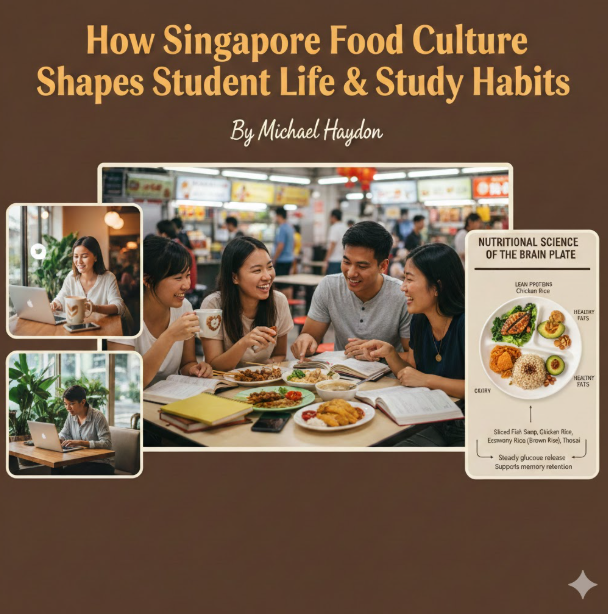
For a student in Singapore, the sound of a sizzling wok or the aromatic scent of Hainanese chicken rice isn’t just a signal that it’s dinner time—it is the background score of their academic journey.
In a city-state often dubbed the “Food Capital of the World,” the relationship between what we eat and how to study effectively is inextricably linked. As an education researcher, I’ve observed that whether you are a local student “mugging” for A-Levels or an international student navigating a semester at NUS or NTU, Singapore’s unique culinary landscape serves as both literal and metaphorical fuel.
From late-night “supper runs” to the ritualistic caffeine kicks at a local kopitiam, food culture dictates the rhythm of student life in Singapore.
The Hawker Centre: The Ultimate “Study Pod”
While modern libraries like Lee Kong Chian are popular, the humble hawker centre remains a cornerstone of the Singapore student experience. It represents the “social break” essential for preventing burnout during intense revision cycles.
Singaporean students are known for their intense “kiasu” (fear of losing out) spirit.However, the communal nature of hawker dining forces a mental reset. Sharing a plate of satay or a bowl of laksa provides a space to vent about difficult university modules and share exam tips, building a support system that makes academic pressure bearable.
The Nutritional Science of the “Brain Plate”
Based on dietary guidelines and cognitive research, a balanced diet is the foundation of memory retention. To maintain a high GPA, students must look beyond simple calories and focus on cognitive fuel.
| Food Category | Local Examples | Academic Benefit |
| Lean Proteins | Sliced Fish Soup, Chicken Rice | Sustained alertness and neurotransmitter repair. |
| Complex Carbs | Economy Rice (Brown Rice), Thosai | Steady glucose release for long lectures. |
| Healthy Fats | Avocado, Steamed Fish | Supports memory retention and brain health. |
Fueling the Brain: Top “Mugging” Foods
Singaporean cuisine offers a variety of “brain foods” that students have leaned on for generations:
- The Power of Protein: Omega-3 fatty acids in sliced fish soup provide essential nutrients for cognitive function during long research hours.
- The “Teh” and “Kopi” Culture: A local Kopi-O Siew Dai (black coffee, less sugar) is the traditional precursor to modern energy drinks. It provides a caffeine spike without the sugar crash—ideal for Polytechnic or JC students attending back-to-back tutorials.
- The Comfort Factor: During high-stress periods like the IB Diploma finals, comfort foods like Congee act as a psychological balm, helping to manage cortisol levels.
Managing The “Academic Plate” And Workload
Regardless of whether you are studying in Singapore or abroad, the “food coma” is a universal threat. Smart students know that a heavy meal right before a mock exam leads to lethargy.
However, the biggest challenge isn’t just balancing physical nutrition—it’s how to manage university workload when your “academic plate” is overflowing. High school and university learners often find themselves juggling multiple projects, CCAs, and complex modules simultaneously.
Strategic students know that they don’t have to do everything alone. Just as a chef relies on high-quality ingredients to perfect a recipe, many students utilize famous websites like Myassignmenthelp.com to streamline their research and university projects. This ensures that even when your schedule is packed with mid-terms, your academic output remains top-tier, leaving you more time to focus on your well-being.
Social Media And the “Cafe-Hopping” Study Method
For Gen Z and Gen Alpha, food culture has evolved into “vibes.” The rise of aesthetic cafes in areas like Tiong Bahru and Jalan Besar has created the “Cafe-hopping study session.”
This trend offers a psychological shift from a stressful home environment, allowing for “deep work.” The rise of “Study-with-me” vlogs featuring trendy SG cafes has created a digital community where students from Singapore to London motivate each other to stay productive.
Expert Tips: Balancing Food and Studies
- Meal Prep for Finals: During exam month, opt for healthier hawker options like Yong Tau Foo (more greens, less fried items) to keep your mind sharp.
- Use Food as a Reward: Set a goal (e.g., “I will finish this case study “) and reward yourself with your favorite bubble tea.
- Don’t Suffer in Silence: If academic pressure is ruining your appetite, reach out for help. Whether it’s a tutor, a counselor, or a professional writing service, clearing your mental desk is the first step to success.
Frequently Asked Questions
Q.1 What is the best hawker food for concentration during “mugging” sessions?
For sustained focus, opt for Sliced Fish Soup (clear broth) or Yong Tau Foo (with plenty of greens). These are high in lean protein and micronutrients like Omega-3, which support brain function without causing the dreaded “food coma” that heavy, carb-rich meals like Char Kway Teow might induce.
Q.2 Is “Kopi” better than energy drinks for late-night study sessions?
Local Kopi-O Siew Dai (black coffee, less sugar) is often preferred by SG students. It provides a clean caffeine boost without the high taurine or excessive artificial sugars found in energy drinks, leading to a steadier focus period rather than a sudden sugar crash.
Q.3 Where are the best food-friendly study spots in Singapore?
While libraries are quiet, many students prefer Community Clubs (CCs) with study rooms or work-friendly cafes in areas like Tiong Bahru and Upper Thomson. Some students also prefer the ambient “buzz” of hawker centers during off-peak hours (2 PM – 5 PM) to avoid the isolation of home.
Q.4 How can I avoid “food coma” before a major exam or lecture?
The key is to avoid high-GI (Glycemic Index) foods. Instead of white rice or fried noodles, try Thosai or a small portion of Economy Rice with brown rice. These provide a slow release of energy, keeping you alert for 2–3 hour papers or long university modules.
Q.5 What should I do if my “academic plate” is too full to even eat properly?
Stress-induced loss of appetite is common during finals. To manage a heavy workload, break your tasks into smaller “bite-sized” goals. If you are overwhelmed by complex research or university projects, consider using professional resources like MyAssignmentHelp.com to help streamline your workload, ensuring you have time to maintain a healthy eating schedule.
Conclusion
Singapore’s food culture is more than a tourist attraction; it is the lifeblood of the student community. It provides energy for long nights and the comfort needed during times of stress.
As you navigate your journey through high school and university, remember to savor every bite and every lesson. If you ever find your workload becoming unmanageable, remember that support is available to help you clear your desk, so you can focus on enjoying the rich, flavorful life that Singapore has to offer.
About the Author:
Michael Haydon is a top education consultant and researcher specializing in tertiary education trends across Southeast Asia. With over a decade of experience analyzing student productivity and mental health, Michael provides evidence-based insights into how environment and lifestyle choices impact academic outcomes.
His work emphasizes the importance of a balanced “academic plate.” By combining local cultural knowledge with practical study solutions—including his advocacy for high-quality academic support services—Michael helps students navigate the rigors of the Singaporean curriculum with confidence and clarity.