
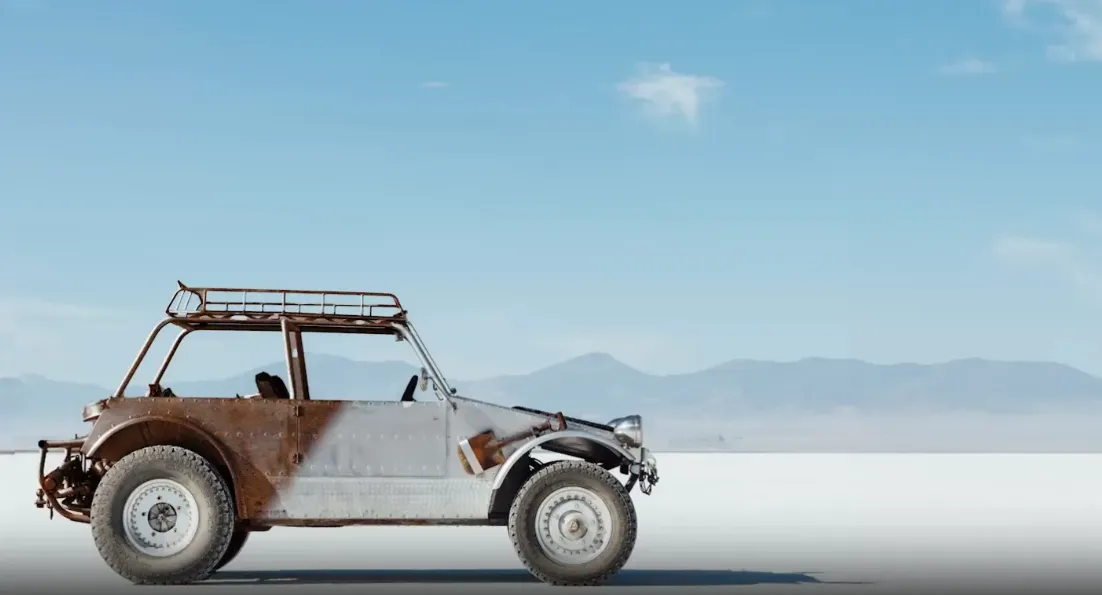
The global cost of rust damage reaching over two trillion dollars every year. Car shops have spent decades using messy sandblasting or toxic chemicals that often warp metal and create safety risks. Laser cleaning fixes this. This new technology uses a specialized light beam to vaporize rust and old paint without hurting the metal underneath. It is fast. This “cold” process protects the car’s body while keeping the workspace clean and safe for everyone.
Why Laser Cleaning Outperforms Traditional Methods
The automotive restoration industry is currently undergoing a technological shift comparable to the move from lacquer to urethane paints. The driver of this shift is fiber laser rust removal.
Zero Damage to Delicate Car Panels
The greatest fear in restoring classic cars is substrate damage, particularly those with thin gauge steel or aluminum bodies.
To understand why laser cleaning is superior, we must look at the science of ablation. High-powered, pulsed fiber lasers work on the principle of selective vaporization.
- Absorption: Contaminants like rust (iron oxide) and paint have a high absorption rate for the specific light wavelength generated by the laser. The underlying base metal (steel or aluminum) reflects this wavelength.
- Sublimation: When the laser beam hits the surface, the energy is absorbed solely by the rust, causing it to instantly turn from a solid to a gas (plasma).
- Thermal Dissipation: Because the laser pulses are incredibly short (nanoseconds), the heat does not have time to transfer to the base metal. This is known as “Cold Ablation.”
You can strip a door skin without the risk of heat warping or removing healthy metal, preserving the vehicle’s structural integrity and original VIN stampings.
Eco-Friendly and Chemical-Free Process
Chemical stripping requires the management of toxic sludge and runoff. Sandblasting produces silica dust, a known carcinogen requiring heavy PPE and air filtration.
Laser car cleaning is a dry, contact-free process. The only waste produced is the vaporized coating itself, which is captured immediately by a fume extractor.
- No Solvents: Eliminates the purchase and disposal of methylene chloride or other stripping agents.
- EPA Compliance: Drastically simplifies adherence to environmental protection standards.
- Shop Hygiene: Keeps the rest of the shop clean, allowing restoration work to happen near paint booths or assembly areas without cross-contamination.
Unmatched Precision in Hard-to-Reach Areas
Traditional tools are blunt instruments. An angle grinder or sandblaster cannot easily clean the inside of a door jamb, the threads of a bolt, or the intricate casting of an engine block without disassembly or damage to surrounding components .
Laser cleaning allows for surgical precision. The operator can control the beam width and intensity to:
- Clean rust from a VIN plate without erasing the numbers.
- Strip paint right up to a rubber window seal without burning the rubber.
- Clean grease from engine cooling fins without abrasive entrapment.
Comparing Laser, Sandblasting, and Chemical Stripping
| Feature | Laser Cleaning | Abrasive Blasting (Sand/Soda) | Chemical Stripping |
| Substrate Impact | Non-abrasive; Zero metal loss | High impact; Risk of pitting/warping | Chemical reaction; Risk of acid entrapment in seams |
| Consumables | Electricity only | Media (Sand, Soda, Walnut shells) | Chemical solvents, Neutralizers |
| Cleanup | Instant (Fume Extraction) | Extensive (Media everywhere) | Difficult (Toxic sludge disposal) |
| Precision | High (Target specific spots) | Low (Blast scatter) | Low (Liquid spreads) |
| PPE Required | Laser Safety Glasses, Mask | Full Blast Suit, Respirator | Apron, Gloves, Vapor Respirator |
| Noise Level | Low to Moderate | High (Compressor + Nozzle) | Low |
Efficiency and Labor Cost Savings
While the initial investment for a laser unit is higher, the operational efficiency changes the P&L statement. Sandblasting requires time-consuming masking. Post-blast, the vehicle requires hours of vacuuming and blowing out crevices to ensure no sand ruins the future paint job.
Laser cleaning is “plug and play.” A technician can walk up to a fender, clean a spot in 2 minutes, and walk away. There is no media to sweep up and no booth to clean.
Safety and Operator Protection
Safety is a massive “hidden cost” in auto body shops. Blasting creates physical fatigue and respiratory risks. Chemical dipping involves burn hazards.
Laser cleaning creates a safer environment. The primary safety requirement is specialized eyewear (OD 6+ rated) to protect against scattered light. The ergonomic handheld laser gun is lighter than a blast hose, reducing operator fatigue and allowing for longer, more consistent work sessions.
Top Applications for Automotive Professionals
Full Chassis and Frame Restoration
This is the heavy lifting. Fiber lasers can rapidly remove thick undercoating, decades of road grime, and deep surface rust from ladder frames and unibodies. It exposes stress cracks or previous welding repairs that blasting media might hide by peening the metal over.
Selective Paint Stripping for Spot Repairs
Imagine a classic Porsche with a small patch of bubbling paint on the quarter panel. Traditionally, you might have to sand a large area to blend it. With a laser, you can strip the paint layer-by-layer. You can remove the clear coat and base coat while leaving the factory electro-coat primer intact if desired. This capability is revolutionary for preservation-class restorations.
Engine Block and Component Degreasing
Laser cleaning isn’t just for rust; it is excellent for oil and grease. The laser energy creates a shockwave that ejects oils from the surface of cast iron or aluminum engine blocks, transmission cases, and differential housings. It restores the “cast” look of aluminum parts (like alternators or intakes) without the unnatural shine that comes from wire wheeling or vapor honing.
FAQs
Q1: Does laser cleaning remove car paint?
Yes.High power will strip multiple layers of paint and Bondo down to bare metal instantly. Lower power settings can be used to gently clean oxidation off original paint or remove just the top layer of paint.
Q2: Is laser cleaning safe for classic car metal?
Absolutely. It is currently the safest method available for classic cars. Because it is non-contact and non-abrasive, it does not thin the metal. This is critical for vehicles where replacement panels are no longer manufactured, and every micron of original steel needs to be preserved.
Q3: What is the cost of laser car cleaning?
There are two ways to look at cost: Equipment ownership vs. Service cost.
- Equipment: Professional high-power units (1000W-3000W) range from $7000 to $20000+.
- Service: For a car owner hiring a mobile laser cleaning service, the hourly rate typically ranges between $250 and $400. While the hourly rate is higher than sandblasting, the speed means the total bill is often comparable, but with zero risk of damage and no cleanup costs.
Conclusion: The Future of Your Restoration Business
We are witnessing the sunset of abrasive blasting for high-end automotive restoration. The transition to laser car cleaning represents a move toward precision, safety, and environmental responsibility.
For the collector, it offers peace of mind that the vehicle’s history is being preserved, not eroded. For the shop owner, it offers a competitive advantage—the ability to advertise “non-destructive restoration” and deliver faster turnaround times.
Are you ready to modernize your restoration process? Contact us today to learn more about our laser solutions.