
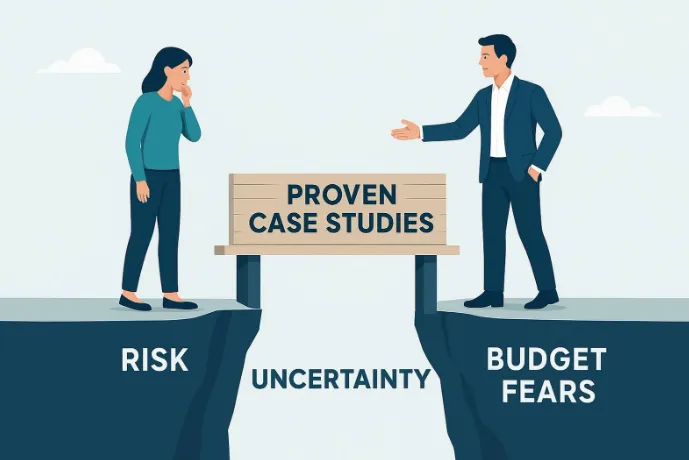
In an industry built on multi-million dollar investments and high-risk projects, trust is the unseen base under every successful build. Breaking through trust barriers takes more than a handshake; it needs solid proof of skill and reliability.
By using professional construction case study writing, firms can turn vague promises into clear evidence and reduce the doubts that often slow down new partnerships. These stories act like a bridge, showing potential clients that your firm does not just say it can solve problems-it has a clear record of doing it.
The construction sector is highly competitive, and reputation is often a company’s most valuable asset. But trust does not appear overnight; it grows through consistent delivery and openness. Case studies act as a “single source of truth,” letting potential clients see the depth of your expertise, from difficult tunnel excavations to precise instrumentation for geotechnical monitoring.
When you give a clear view of how you work, you reduce the “unknowns” that so often cause hesitation.
What Are Trust Barriers in Construction Projects?
Why Is Trust Often Lacking in the Construction Industry?
Trust is often missing in construction because the work is complicated and the financial stakes are high. Clients worry about unexpected ground conditions, tight timelines, and budgets getting out of control. When a project involves a large investment, any doubt about a contractor’s skills can feel like a huge risk.
On top of this, the industry is going through a major generational change: long-time leaders with decades of relationships are handing over to younger professionals who must prove themselves in a tougher, less forgiving market.
Another serious barrier is the “unknown” factor, especially around new technology and different management approaches. Every project has its own mix of personalities and leadership styles, which makes it hard to build instant trust with new partners.
Without a shared history, people often assume the worst, worrying that poor communication or weak technical knowledge will cause failure. This uncertainty makes it harder for even very capable firms to win work without strong proof of what they have done before.
How Do Trust Barriers Impact Project Outcomes and Client Relationships?
When trust is missing, project efficiency drops. A lack of trust often leads to heavy micromanagement, which is tiring for both client and contractor. It slows down delivery and creates bottlenecks, leading to scattered information, mismatched expectations, and expensive waste. Research shows that companies with low trust are more likely to miss deadlines, see higher staff turnover, and lose repeat business. Low-trust environments also tend to spark conflict over change orders and project scope-disputes that could have been avoided with clear, honest communication.
The financial cost is also high. High-trust companies can save millions of dollars each year by cutting down on rework and accidents. Where trust is low, relationships become purely transactional instead of cooperative. This blocks the “neighborhood” delivery model-where everyone works as partners-and encourages an “us versus them” mindset. Without mutual respect and openness, the chance of delivering a project safely, on budget, and on time drops sharply.
How Construction Case Studies Bridge Trust Gaps
What Is a Construction Case Study?
A construction case study is more than a quick summary; it is a detailed, easy-to-read story that follows a project from start to finish. It is a way to look closely at one project, documenting the scope, materials, methods, and decisions involved. Unlike a simple set of photos, a case study gives the background needed to show why choices were made and how specific results were achieved.
You can think of it as a blueprint for your firm’s success. It breaks down a complex build into a clear story that highlights your problem-solving skills and technical knowledge. Whether it is a large bridge monitoring job or a custom home, the case study records the key stages and gives a transparent view of your team’s abilities. It turns your portfolio from a set of “nice images” into a careful, detailed showpiece of professional performance.
Why Do Clear, Compelling Case Studies Inspire Confidence?
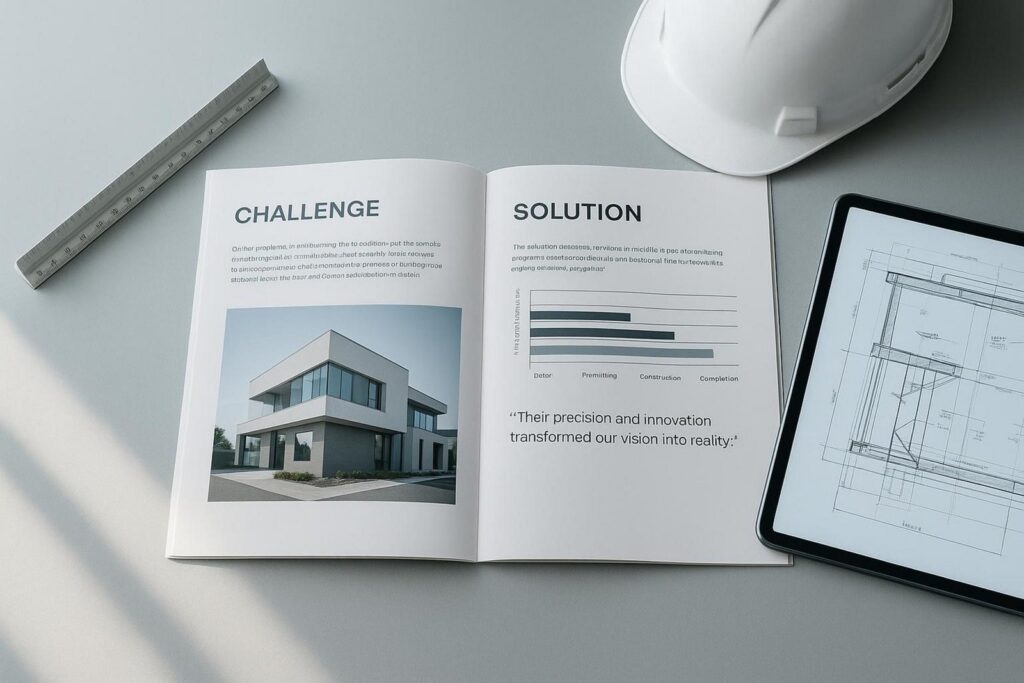
Case studies build confidence because they give “social proof” — real evidence that a firm can do what it promises. In an industry full of “unknowns,” a well-documented success story reassures clients that you can handle similar challenges for them. When you explain how your team handled a particular problem — like a permit delay or supply chain issues — the story proves your capability in a way that buzzwords never will. As specialists often emphasize, these narratives are the backbone of a credible construction brand.
Case studies that include data, visuals, and client quotes feel especially real. When a potential client sees that most of a trusted firm’s projects come from repeat customers, they feel safer investing. Being open about the problems you faced on a project actually increases trust; it shows you are honest and have the practical skills to work through trouble and still succeed.
This level of openness makes your firm feel more human and dependable. To see examples of how to turn project challenges into compelling success stories, visit https://builtfor.studio/.
Key Elements of Effective Construction Case Studies
Providing Project Background and Clear Objectives
Every strong case study starts with a clear background. This sets the scene by naming the client (within privacy limits), their sector, and what they wanted before the project started. For example, for a custom home, explaining why the family chose to build instead of buying an existing home helps future clients relate and see themselves in a similar position.
Stating the goals early on helps the reader understand the reason behind the project. Was the aim to gain more usable space, add an automated geotechnical monitoring system, or hit a strict sustainability target? By laying out these goals, you create a clear reference point to measure success, making the results much more meaningful.
Highlighting Challenges and Solutions
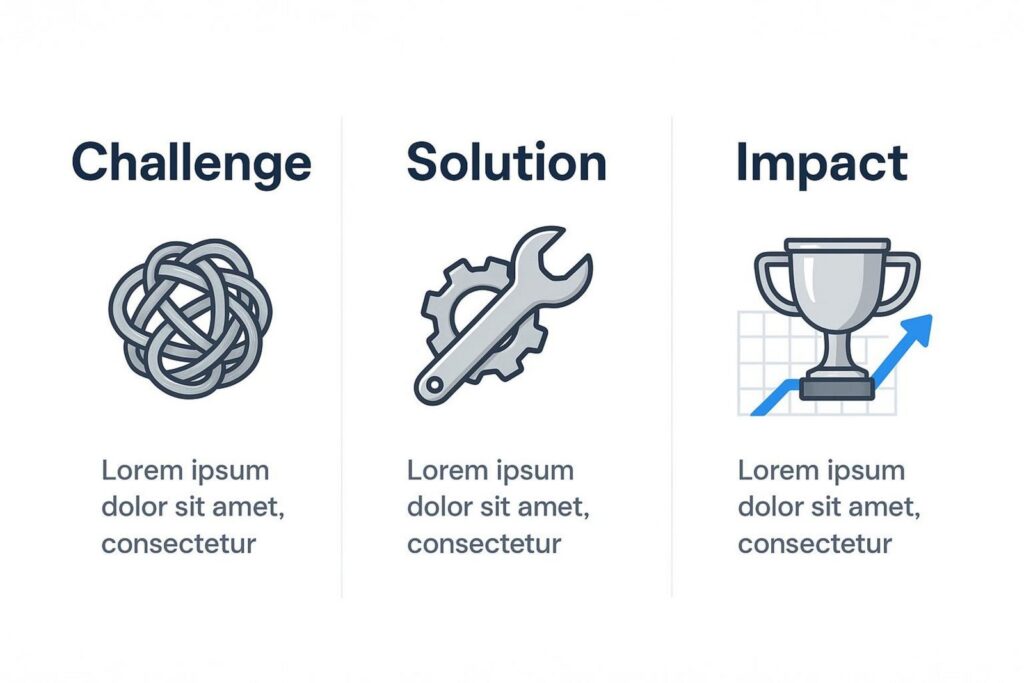
The middle part of your case study should focus on the main hurdles. Construction is rarely smooth, and being honest about budget limits, surprise ground issues, or permit delays actually builds credibility. It shows your firm is ready for real-world job site conditions. Sharing these challenges creates a “make-or-break” moment in the story that keeps readers interested.
After stating the challenges, you should describe the solutions your team used. This is where you show your technical skill and unique approach. Did you apply new technology to solve a design clash? Did you change your scheduling method to deal with supply problems? Explaining these steps shows the reader what you can do and gives them confidence that you can handle their project issues too.
Demonstrating Measurable Results and Impact
The results section is often the strongest part of the case study. Avoid vague claims and use clear numbers and outcomes. Explain how a new facility supported innovation, how automated monitoring cut risk, or how a custom home gave a growing family more useful space. If you saved the client money or finished early, this is where you highlight it.
Good storytelling here makes the outcome feel real. It is not just about a completed structure; it is about the value you delivered to the client. When future clients can see a straight line from a big-picture goal to a specific, successful result, they are far more likely to move from being a lead to becoming a long-term partner.
Including High-Quality Visual Documentation
High-quality visuals are a must in any strong case study. While “before and after” photos are useful, adding progress photos helps bring the story to life and shows the different phases of the project. Visuals like simple charts, key numbers, and professional photography add polish and reflect the standard of your work.
Online, multimedia content stands out. If you can, add video-such as a 30-60 second walkthrough or a time-lapse of the build-to leave a strong impression on visitors. Visual proof supports your “project-to-proof” story, making your claims much harder to question.

Securing and Showcasing Client Testimonials
Lasting trust often grows from what others say about you, not what you say about yourself. A detailed quote from a happy client adds a powerful layer of credibility. The best testimonials talk about the client’s original worries and doubts and explain how your work eased those fears.
To get strong testimonials, guide your clients with simple prompts. Ask how they felt before starting, what they were most worried about, and what they would tell someone unsure about hiring your firm. When readers see a client come through a demanding project relieved and proud of the final result, it becomes one of the strongest trust signals you can offer.
Best Practices for Creating Clear and Persuasive Case Studies
Structuring Case Studies for Maximum Clarity
To get the best impact, use a consistent structure for all your case studies. Use clear headings to lead the reader through background, challenges, solutions, and results. This keeps the content easy to scan, so even a busy project manager can quickly see the value you bring. Avoid heavy jargon that might confuse non-technical readers; use simple and direct language.
A consistent layout also supports your brand. When every success story follows a similar format, it sends a message that your methods are disciplined and repeatable. It makes it easier for potential clients to compare projects and see how your skills apply across different project types and sectors.
Writing with Transparency and Authenticity
Honesty is the “secret ingredient” of a strong case study. Do not shy away from admitting when things went off track, as long as you explain how you fixed the situation. Being open about problems and talking directly about risks and opportunities builds trust between people and organizations. It shows that your firm prefers honesty over a polished but unrealistic image.
Let your writing style reflect who you are as a company. If your firm is known for being innovative and forward-thinking, let some of that energy show in your words. If you are a family-owned company focused on long-term relationships, highlight the personal contact and support you gave the client along the way.
Incorporating Data and Metrics to Support Claims
Claims like “high quality” or “on time” mean little without proof; numbers are far more convincing. When you can, include specific figures that back up your story. For example, mention if you finished 10% under budget or if your safety processes led to zero lost-time incidents. Firms with high trust levels are far more likely to be clear and specific about their expectations and feedback, and this clarity should also appear in your reporting.
Using a single reliable source for project data keeps your case studies accurate. When you can point to numbers-like a 2-7% increase in gross margins linked to repeat work-you create a strong financial argument for choosing your firm over others. Data turns a simple story into a solid business case.
Tangible Benefits of Using Case Studies to Build Trust
Establishing Credibility and Social Proof
In a crowded market, standing out matters. Case studies act as real proof of what your company can do, positioning you as a skilled and experienced team. They give concrete examples that potential clients can rely on, helping you move beyond basic “handshake” trust into clear professional credibility. This credibility is a key building block for growth in construction.
Social proof is especially helpful for easing fears about new technology or complex geotechnical work. When a client can see that you have already delivered a similar automated monitoring system on another excavation, their worry about the unknown shifts into confidence in your past performance.
Differentiating Your Construction Firm from Competitors
A strong case study shows what makes your company different-whether that is a new method, advanced tools, or a serious focus on sustainability. By sharing success stories that clearly show these strengths, you set yourself apart from competitors who only share photo galleries. You become more than a generic builder; you become a problem-solver with a clear set of high-value skills.
This difference is key for winning higher-margin work. Many clients are ready to pay more for a firm that can clearly prove its expertise in a certain type of project or design style. Case studies let you “show, not just tell” your unique value, making you the clear choice for clients with specific and challenging needs.
Delivering Valuable Insights to Prospective Clients
Beyond marketing, case studies share practical lessons that can shape future projects. They help potential clients see what it is like to work with you-from how you communicate to how you solve problems. This lowers the friction at the start of a relationship, because the client already has a good sense of how you operate.
Sharing these insights builds rapport even before the first meeting. It positions your firm as a helpful partner, not just a supplier. When a case study clearly links big strategic aims to concrete project outcomes, it teaches clients what works and what does not on similar jobs, strengthening your role as a trusted guide.
Showcasing Case Studies to Overcome Trust Barriers Online
Selecting the Right Case Studies for Your Website
Not every project should become a case study. Choose projects that show your key strengths, standout solutions, and best outcomes. Focus on work that matches the kind of projects you want more of. If your goal is to grow in custom homes, highlight detailed stories from your most complex and impressive residential builds.
Make sure your website layout makes these stories easy to find. A clear “Project Portfolio” or “Case Studies” section should be a core part of your construction website. By carefully selecting your strongest work, you create a high-conversion space that leads visitors to reach out for more details.
Using Multimedia to Boost Impact
With attention spans getting shorter, multimedia can greatly increase the impact of your case studies. Video testimonials, time-lapse job site clips, and interactive 3D models can hold attention in a way plain text cannot. Technology acts as a strong connector in construction, and using it in your marketing suggests you use it effectively on site as well.
Video testimonials are especially strong. A 30-60 second clip of a client describing their positive experience can be reused across social media, brochures, and presentations. It adds a human voice to your online presence, helping your firm feel more approachable and trustworthy to people wherever they are.
How Compelling Case Studies Lead to Lasting Client Relationships
Why Transparency and Storytelling Sustain Trust Over Time
Trust is not a one-time win; it needs ongoing care. By keeping a library of honest, open case studies, you show long-term commitment to quality and responsibility. Storytelling lets you connect your team’s pressures-like market changes or internal shifts-to a larger story of resilience and steady improvement. This steady transparency helps keep your recommendations respected and followed long after the first project ends.
In the end, the real measure of success is whether a client chooses to work with you again. Long-term relationships, such as a 30-year partnership between a design firm and a major manufacturer, grow from a repeating cycle of trust, strong performance, and renewal. When you regularly document what went well and what you learned, you build a culture of trust that attracts reliable partners and supports long-term business success.
Frequently Asked Questions about Trust and Case Studies in Construction
How Many Case Studies Should a Construction Firm Publish?
Quality matters more than volume. While there is no exact rule, a construction firm should aim for at least 3 to 5 strong, detailed case studies that cover its main services. A few well-developed stories work far better than many brief, shallow ones. As your firm grows, keep your portfolio updated with recent projects that show your growing skills and use of modern tools and methods.
Adding new case studies on a regular basis also helps your website’s SEO and keeps content fresh for returning visitors. Aim to publish one major new case study every quarter. This shows that your business is active, successful, and consistently creating value for a wide range of clients.
What Types of Projects Make the Most Effective Case Studies?
The best case studies usually involve high stakes, tough challenges, and clear, measurable outcomes. Projects where you introduced a new solution-like a first-of-its-kind engineering approach or a highly sustainable build-tend to make the strongest stories. These examples help you show your unique strengths and set yourself apart from others.
Projects with very satisfied clients who will give detailed testimonials are especially valuable. The human side-how you eased a specific fear or supported a family or business through growth-is often what sticks in the minds of future clients. Choose projects with a strong “before and after” story, both in the finished asset and in the client’s experience.
Can Small Projects Help Overcome Trust Barriers?
Yes. Small projects can be a great way to show precision, care, and efficiency. They often serve as a “test project” for new clients who want to check your reliability before committing to larger work. A case study on a small but flawlessly delivered renovation can show that you give every job the same serious attention, no matter the budget.
Small projects also help you show range. If you can clearly present both a precision instrumentation job and a major excavation, you appeal to a wider set of clients. For smaller firms, these case studies are key for building early credibility and moving up to larger, more complex work later on.